Beverage Boxing Bonanza – Clemson Packaging Capstone Challenge
Direct-to-consumer beverage shipping keeps growing, and so do the surprises. We’ve helped our partners navigate them, and we’ve seen the dents and leaks land on our own doorstep, can by dented can.
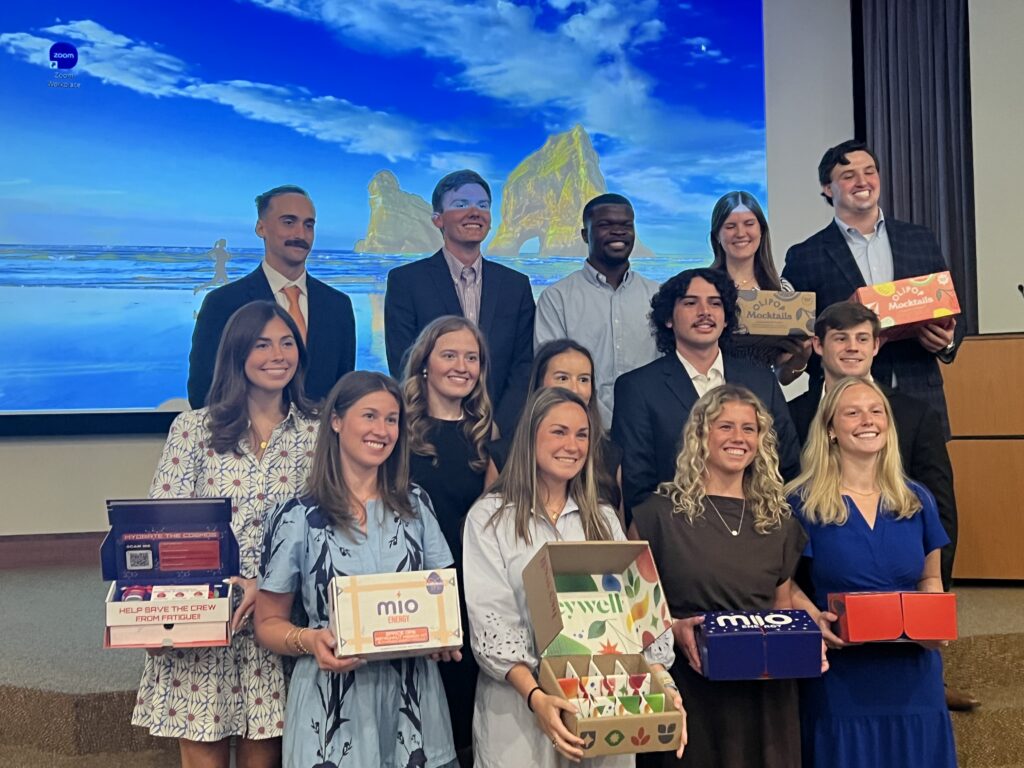
For the third spring running, we’ve sponsored PKSC 4200, Package Design & Development, the capstone of Clemson University’s Packaging Science program. The pattern is hard to ignore: hand the seniors a real-world problem we’ve watched brands wrestle with for years, walk alongside them for 15 weeks, and by May they’ve engineered a shipping system that’s commercial-ready.
The next decades of packaging will be built by these students. Real briefs – not hypotheticals – strengthen the talent pipeline, surface fresh ideas, and turn one-semester relationships into long-term partnerships. PKSC 4200 walks teams of four to six seniors through the full design arc: retail audit, ideation, prototyping, distribution and structural design, ISTA testing, manufacturing economics, and final presentation. A graduate-grade workout, packed into one semester.
Growing Numbers
- 3 consecutive spring semesters sponsored at Clemson
- 15 weeks per design sprint, end to end
- 2 to 4 teams assigned to each Atlantic challenge
- Countless Clemson grads now working at Atlantic or our customers. Relationships built before they walked the stage.
This Year’s Challenge: Ship Heavy Cans Without Breaking Them
Atlantic asked teams to design a fiber-based, curbside-recyclable shipping system that protects beverages (cans or bottles, single or multi-pack) through the full direct-to-consumer supply chain. Damage prevention. Leak protection. Unboxing experience. One package.
It’s a problem we’ve watched beverage brands wrestle with for years. Small teams, tight budgets, and a parcel network that doesn’t love heavy cans.
“These brands are trying to ship heavy cans in a box with some void fill, and it doesn’t cut it. We’ve struggled to find a solution for five or six years, so we handed it to the Clemson students.” — Kyle Pischel, Atlantic Packaging Senior Engineer
The 15-Week Sprint
- Kickoff (weeks 1 and 2). Atlantic presents the company, the product context, and the brief in person on Clemson’s campus. Teams leave with a real-world brief, not a textbook one.
- Mid-semester working sessions. Liaisons Kyle Pischel and Chad Fields meet with each team to give feedback, unblock decisions, and connect students to our engineers, suppliers, and customer plants.
- Final presentations. Atlantic returns to campus to review prototypes, ISTA and Amazon test data, manufacturing economics, and sustainability analyses alongside Clemson faculty.
Students Speak
“Iterative prototyping, and adjusting headspace, and doing lots of rounds of testing was something very new to me but also very exciting to see when our solution finally passed through the testing schedules.” — Hailey Wiethoff, Clemson Packaging Science Student
“The biggest thing I learned is how important 1/16 of an inch is when it comes to how everything fits together.” — Amelia Creech, Clemson Packaging Science Student
AI Joined the Team
Spring 2026 was the first cohort to use AI tools meaningfully in their workflow. Not to do the work, but to surface material options, recommend test setups, and stress-test ideas before prototyping. The next generation treats AI as a collaborator, not a shortcut. That changes how packaging gets designed over the next five years.
What We’ve Learned
- Hard work ships. Both 2026 teams delivered designs that could end up in the supply chain.
- Relationships outlast the semester. Alumni from past cohorts now work at Atlantic and at the customers we serve. We meet them before they have a degree in hand.
- Sustainability is the default. Fiber-based, curbside-recyclable, home-compostable. This generation starts there. The question has shifted from “if” to “how.”
- Old problems, new angles. Briefs that have stumped us for years come back with creative, testable concepts we hadn’t considered ourselves.
Mark the Calendar
Spring 2027, we’re back at Clemson with a new live challenge, pulled straight from our customer base, just as unsolved and just as real as this year’s brief. The problem is already taking shape. The students don’t know it yet. We can’t wait to meet them.