
From AI-powered sorting systems to fiber-based packaging solutions, this column explores what it will take to improve recycling outcomes in the United States.
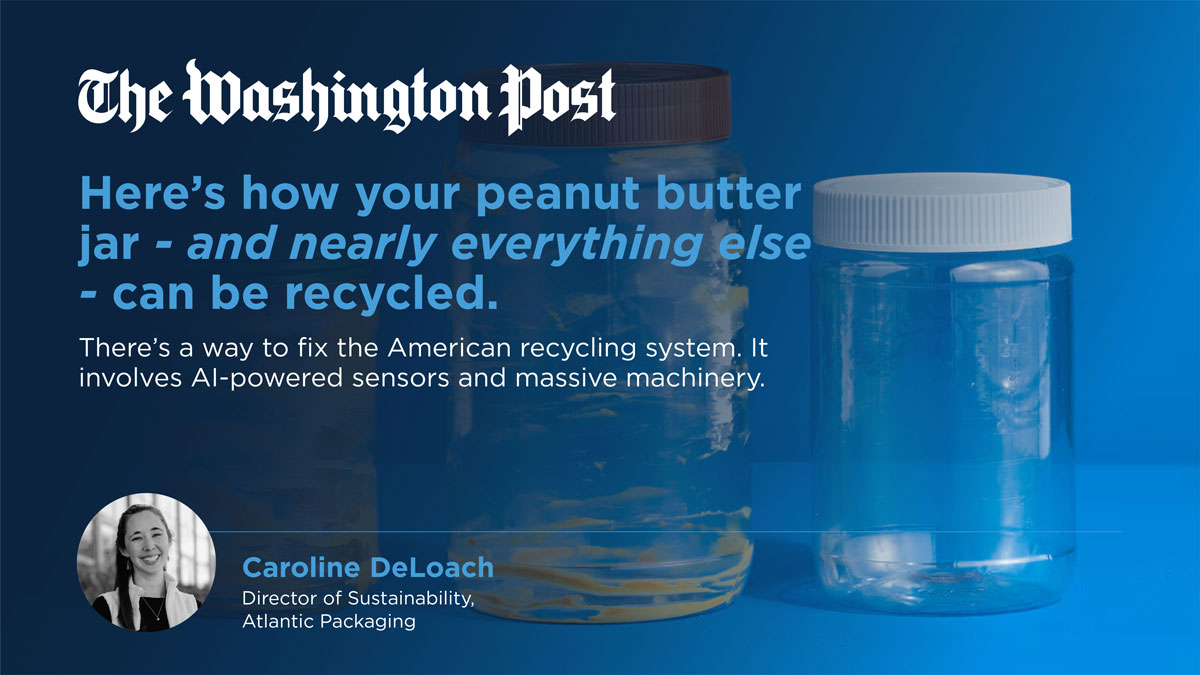
A simple question – Do you really need to scrub out your peanut butter jar before recycling it? – sparked a deep dive into the future of plastic recycling in a recent Washington Post Climate Coach column by Michael J. Coren. Along the way, the story featured insights from , Director of Sustainability at Atlantic Packaging, on the role packaging design and materials play in building a more effective circular economy.
The article explores how modern recycling facilities are using advanced technologies, including AI-powered optical sorting systems, to recover valuable materials from the waste stream. You read more about this process in our Deep Dive about Sorting Recyclables at a Modern MRF.
These innovations are helping recyclers process more material with greater accuracy, proving that better recycling outcomes are possible when systems, technology, and packaging design work together.
As Caroline explains in the feature, Atlantic Packaging’s strategy focuses on offering fiber-based alternatives in applications where they make sense, helping brands reduce their reliance on difficult-to-recycle plastics while improving compatibility with existing recycling infrastructure.
The Washington Post also highlights examples of Atlantic’s work with leading consumer brands, including efforts to replace challenging plastic formats with recyclable paper-based solutions, like PaperForm, Fishbone, and Canopy. These innovations reflect a broader shift happening across the packaging industry as companies respond to evolving regulations, growing demand for circularity, and the need to reduce packaging waste.
The takeaway is encouraging: recycling technology continues to improve, but better packaging design remains an essential part of the solution. By designing packaging that can be more effectively recovered and recycled, brands have an opportunity to reduce waste, support material circularity, and help create a system that works better for everyone.
Read the full Washington Post article here: Here’s how your peanut butter jar — and nearly everything else — can be recycled